
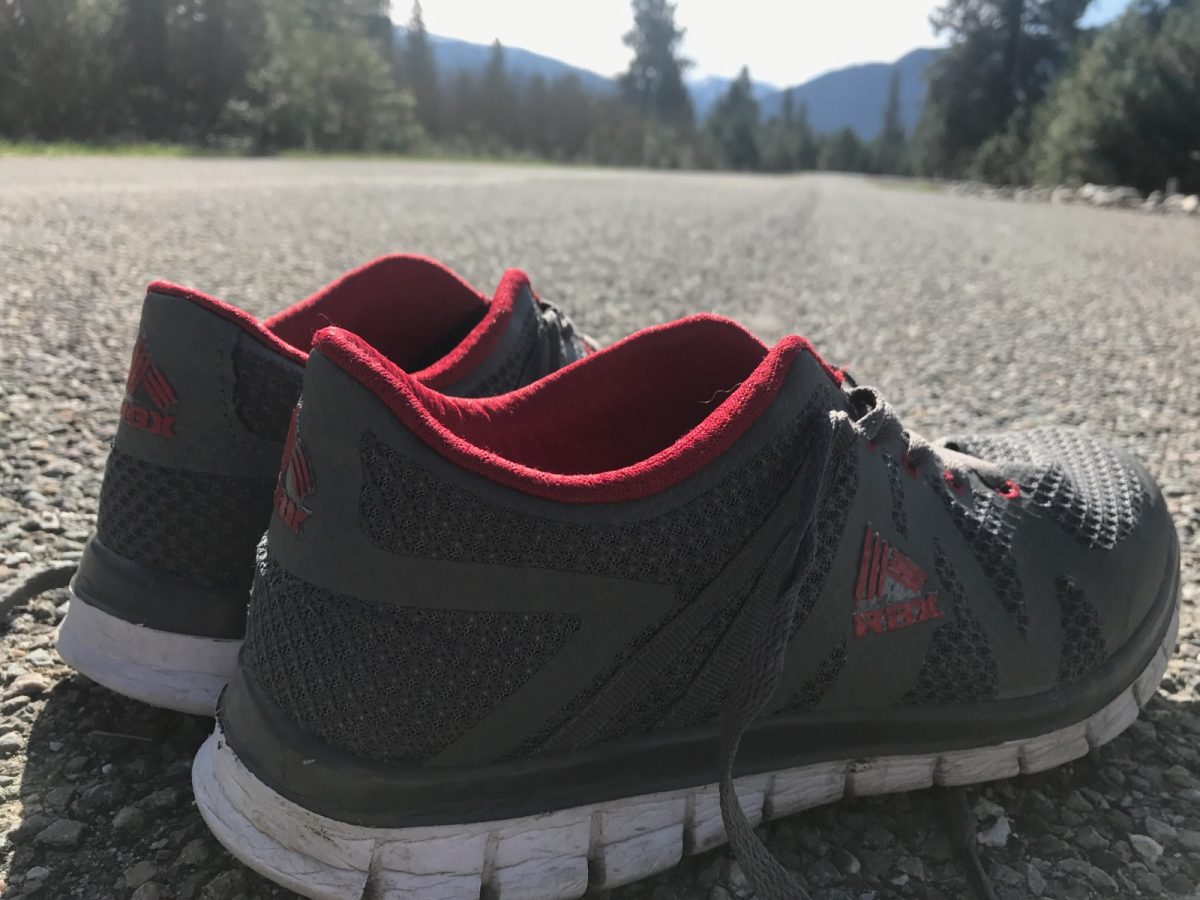
I’ve never been much of a runner, but I’ve also never been one to give up on a goal I have set for myself.
It was 2011, and I had just graduated High School. I had also just decided I would run a marathon. I ‘ve been involved in athletics my whole life; playing baseball, football, and basketball for the majority. Despite this, I highly doubt I had ever gone more than 4 miles in one run before. 26.2 miles seemed daunting, improbable, and challenging. I love a challenge.
I signed up for the September 11th 2011 Bozeman Marathon which was set up to honor those who had fallen 10 years prior. My training began 3 months in advance, and I slowly but steadily improved. As my training progressed, my goals also progressed. I now not only wanted to finish the marathon, I wanted to finish it in less than 3 hours. My time per mile would have to be under 6 minutes and 52 seconds to accomplish this.
With a month left to train, I realized I hadn’t actually been “training,” but rather just running sporadically. I decided to do some quick research and came across multiple articles and templates that advocated for at least one long run before beginning a tapering process. The furthest I had run up until this point was 12 miles. A week later I set out early in the morning to try and go over 18 miles.
I ended up running just over 21 miles with an average mile time of 7 minutes and 2 seconds. I was pleasantly surprised at the ease of this pace, and became quite confident that with some adrenaline and race-day motivation I could shave off the time needed to achieve a sub-3-hour marathon time. I was extremely excited and optimistic. I was also wrong.
The day after my 21 mile run I became severely ill. The long run had completely overwhelmed my immune system. The sickness was relentless and involved multiple days of puking, a high fever, and the inability to train. My planned taper turned into complete abstinence. I managed to run twice during that three week period, once for 3 miles and once for 4. Each of those runs left me completely exhausted.
These last two weeks before the run were also my first two weeks of College at the University of Montana. I spent the majority of those days lying in my dorm bed.
My parents and supporters told me there was always another marathon, always another opportunity. It would have been easy to agree, it would have been easy to take their advice, and it would have been easy to try another time. I didn’t like easy. I decided I would run the marathon anyway.
With the majority of my training completely lost, I shifted my goal once again to just finishing the marathon. I also added a stipulation of avoiding any walking at all cost. If I was going to “run” the marathon, then I was actually going to run it.
During my 21 mile run three weeks prior to the marathon, I didn’t “hit the wall.” I felt energized and in control the entire run.
During my marathon I hit the wall at mile 5. At mile 7 I had to walk through a water station for the first time, failing my goal. At mile 12 my parents told me that I could quit at any time and try again on another date. They told me they were proud and that I had done enough. They were 100% right and had my best interest in mind. But that also pissed me off. A deep fire was lit to prove them wrong. They had pushed the right button.
I almost quit multiple times, and the voice in my head became incredibly persuasive and equally logical. But I didn’t quit, I couldn’t quit.
Excruciating cramps began in my legs around mile 18. I hobbled, hopped, and “ran” with what must have been the most awkward looking form. Each step was increasingly painful, but each step also brought me closer to my goal.
At mile 23 I passed my parents again. I attempted to run normally for the 70-80 yards I was in their view. That attempt was probably pretty poor, but they never mentioned it.
I finished the marathon much more slowly than I had set out to do. I finished the marathon in a grueling 3 hours and 43 minutes. I FINISHED the marathon! Complete bliss.
I learned a lot about myself that day. I learned about pain. I learned about obstacles. I learned about perseverance. But most of all I learned that I can achieve any damn thing I set my mind to.

Comments 99,541
darknet market vendors versus market link https://mrdarkmarket24.shop/ – reddit darknet markets links
dark markets sweden onion seiten 2022 https://mydeepdrugurl.shop/ – buy drugs on darknet
best darknet market drugs site onion liste https://onion-darknetmarkets.shop/ – orange sunshine lsd
darknet market comparison onion directory 2022 https://mrmarketonion.link/ – tor2door market link
dark market link tor markets 2023
what darknet market to use now darknet market get pills https://mrmarketonion.shop/ – dark websites reddit
dark internet drug markets onion
deep website search engine drug markets onion https://mrdarknet.com/ – best darknet markets 2023
dark markets bulgaria most popular darknet markets 2023 https://private-darkmarket.com/ – darknet market status
onion linkek dark markets https://private-darkmarket.link/ – Cocorico link
dark web onion markets darknetlive https://onion-darknetmarkets.shop/ – best darknet market 2023 reddit
dark web search engines dark internet
darknet drug markets 2022 buy bank accounts darknet https://opendarknetmarkets.link/ – darknet drugs sales
dark websites dark net
dark markets spain dark markets chile https://mytormarket24.com/ – best darknet market reddit
darknet market links 2022 reddit black market websites 2023 https://opendarknetmarkets.link/ – market links darknet
darknet sites deep web drug links
carding deep web links buying drugs online on openbazaar https://mrmarketonion.com/ – darknet drugs shipping
dark web drugs australia deep web shopping site https://premiumdarkmarket24.shop/ – underground black market website
tor markets 2023 drug markets dark web
new onion darknet market how to buy bitcoin and use on dark web https://mrdarknet.shop/ – darknet markets reddit 2022
Still, some like Ellen Snelling of the Hillsborough County Anti-Drug Alliance, worry about the darker side of these products and whose hands they might fall into. These measures reflect that advocates for magic mushrooms are following some of the same lessons learned from the proliferation of state marijuana legalization efforts in the last decade. “This is a glaring hole in the research,” said Jules Evans, an honorary research fellow at Queen Mary University of London who is seeking funding to conduct empirical research on how to help people who experience difficult trips. “Imagine if NASA spent all its money researching how to take people into space, and invested nothing on how to bring people back to Earth.” By signing up, you agree to our User Agreement and Privacy Policy & Cookie Statement. http://www.on4lar.be/forum/member.php?action=profile&uid=104760 Your email address will not be published. Required fields are marked * The couple grow mushrooms in two rooms created inside the former cattle barn. “The barn had previously been home to beef cattle and rabbits,” said Coleclough. “Though there hadn’t been any in there for a number of years.” And while one might assume growing mushrooms is a less smelly pastime than raising animals, it still has its nose and throat hazards. “Because the mushrooms release spores,” said Coleclough. “We wear HEPA-filtered masks to keep our lungs clean.” For these, and many Canadians, farming fungi just makes sense. “Mushrooms can be grown year-round indoors,” said Coleclough. “And lots of cultures eat them.” Decreasing the amount of toxin that enters the bloodstream may be accomplished in several methods. If your pet sees your veterinarian soon after ingestion, your pet’s veterinarian may induce vomiting to remove mushrooms from the stomach. A GI medication such as activated charcoal that will bind with the toxin and prevent its absorption. Sometimes, the doctor may perform a gastric lavage to eliminate any remaining mushrooms from the stomach.
list of darknet markets reddit tor dark web https://premiumdarkmarket24.shop/ – buying on dark web
darknet marketplace deep dark web
wiki darknet market bitcoin dark web https://mrdarkweb.shop/ – darknet market onion links
reddit darknet market guide bitcoin black market https://onion-darknetmarkets.link/ – hitman for hire dark web
new onion darknet market darknet drug dealer https://mydeepdruglinks.com/ – deep web links reddit 2023
darknet drug markets 2023 dark web links reddit https://onion-darknetmarkets.com/ – darknet markets list 2022
dark web link darknet drug links
darknet market search engine darknet market link updates https://premiumwebmarketlinks.link/ – underground market online
top darknet markets dark markets canada https://mydeepdruglinks.com/ – darknet market xanax
darknet markets without login sichere darknet markets 2022 https://mrdarkweb.shop/ – deep net websites
top 10 dark websites dark web market links https://mydeepdrugurl.link/ – darknet market for noobs
dark web trading tfmpp pills https://localdarkwebsmarket.shop/ – tor darknet
dark markets malaysia the dark market https://mytordarknetmarket.shop/ – top 10 dark websites
reddit darknet market list 2022 alphabay market url https://mrdarknet.com/ – new darknet markets
credit card dumps dark web reddit darknet market how to https://mydarkwebmarketlist.shop/ – adresse onion
how to anonymously use darknet markets agora darknet market https://onion-darknetmarkets.shop/ – dark web links 2022
deep dark web free dark web
legit onion sites the dark web links 2023 https://mytordarknetmarket.shop/ – onion tube porn
grey market link darknet market links 2022 https://mrdarknet.shop/ – tor2door market url
counterfeit money dark web reddit Cocorico darknet Market https://oniondarknet.com/ – Kingdom Market
best working darknet market 2023 darknet market controlled delivery https://mydeepmarketsweb.link/ – orange sunshine lsd
deep web markets darknet markets
dark web store incognito url https://mrdarknet.link/ – darknet market noobs reddit
darknet drug market dark web search engines
Why do I have a lot of white discharge likes?
https://flagylpls.com flagyl walmart
dark market 2023 darkmarket 2022
dark markets monaco how to buy drugs dark web https://mydeepnetmarket.shop/ – Abacus Market darknet
darknet drugs dublin buy drugs on darknet https://opendarknetmarket.com/ – dark markets south korea